What is Hikikomori?
Hikikomori is a Japanese word that means to pull inward or withdraw, a word fitting the social phenomenon of extreme reclusiveness prevalent in Japan. It is both a noun and a verb in Japanese, used to describe both the individual and the phenomenon. Since the collapse of Japan’s bubble economy in 1994, young adults began to increasingly isolate themselves from society, spending months to years in their rooms while relying on their parents for financial support and often turning to the internet for connection or distraction. However, with Japan’s aging population, many older hikikomori are left on their own after their parents pass away, and those whose parents are still alive are running out of time as their caregivers grow older.
Hikikomori is a relatively new phenomenon, first coined by psychiatrist Tamaki Saitō in his 1998 book, Hikikomori kyūshutsu manyuaru, or How to Rescue Your Child from Hikikomori. Along with this new phenomenon and its definition came moral panic. During the 2000s, hikikomori individuals were linked with violent crimes by the media and “came to signify a rejection of contemporary society” (Rubinstein and Sakakibara 2020). The increase of reclusive youth is often linked to Japan’s failing economy and lack of new job opportunities (Furlong 2008) and the dissolution of the “family-corporate system,” in which the company treats their employees as family and takes care of them from entry to retirement (Ozawa-De Silva 2021).
According to the 2010 guidelines laid out by the Ministry of Health, Labour, and Welfare of Japan, hikikomori is defined as a condition in which an individual does not leave their house for a period of at least six months and avoids social participation, such as attending compulsory education, being employed at a full-time or part-time job, or meeting with people outside of the home. In the 2018 Annual Health, Labour, and Welfare Report, “an estimated 541,000 people are classified as ‘socially withdrawn,’” with individuals in their thirties making up the largest age demographic at 41.2%. Many of those who experience hikikomori fulfill the diagnostic criteria of at least one psychiatric comorbidity, and those who experience long-term and lifelong reclusion have increased chances of having or developing a mood disorder (Koyama et al. 2010). However, it is important to emphasize that studies have found that hikikomori is not the cause of suicide and suicidal ideation, rather that suicidal individuals have higher chances, about 2.8 times higher, of becoming hikikomori due to psychiatric comorbidities. Furthermore, they are more likely to struggle with interpersonal relationships (Yong and Nomura 2019).
For the youth, hikikomori is often tied closely to school non-attendance, or futōko. In Japan, elementary and junior high school attendance is compulsory, totalling in nine years of mandatory education. The Ministry of Education, Culture, Sports, Science and Technology (MEXT) (2022) defines school absenteeism as not attending school for thirty or more days due to psychological, emotional, physical, or social factors, not including illness or economic problems caused by the COVID-19 pandemic. In this same 2022 survey, the MEXT found that 1.3% of elementary school students and 5% of junior high school students fulfilled the criteria to be considered futōko, and 55% of those absentee students were considered serious cases, missing over ninety days of school. For students, taking part in society means to attend compulsory schooling, and for hikikomori, school absenteeism is a defining feature of their missing social activities.
Following the birth and advancement of the internet and social media, researchers and the public have begun to examine internet addiction as a possible cause of hikikomori. While it is not clear whether internet addiction causes or is caused by hikikomori (Kato, Shinfuku, and Tateno 2020), many hikikomori individuals are spending a significantly greater amount of time online (Tateno et al. 2019). However, the combination of internet addiction and psychiatric disorders, often with suicidal ideation, in hikikomori individuals puts them at risk of interacting with suicide websites. Suicide websites act as a contagion, spreading through the internet and infecting susceptible individuals, such as hikikomori, who rely on the internet for human connection or escape and create the possibility of group suicides planned through these websites. This hikikomori phenomenon points to a larger issue of loneliness and loss of meaning among Japanese youth (Ozawa-De Silva 2021).
Case Studies
Chikako Ozawa-De Silva’s 2021 book, The Anatomy of Loneliness: Suicide, Social Connection, and the Search for Relational Meaning in Contemporary Japan, contains multiple ethnographic pieces taken from online blogs and chat rooms. In chapter 3, “Connecting the Disconnected,” Ozawa-De Silva includes numerous posts and comments made across suicide websites. These online interactions and posts provide insight into the thoughts of lonely individuals, often times students, and the sheer number of translated posts in this chapter emphasizes the widespread and high rates of loneliness and those at risk of hikikomori and suicide. Some of the striking posts mentioned in this book include:
My dependency got worse as I started to participate in chat rooms. I feel anxious when I’m alone. I can’t leave the computer even for a second. I feel anxious that I’m not needed by anyone. Just being told that I’m necessary would be enough – I would have some peace of mind. I’d do anything asked of me so as not to be disliked . . . I’m lonely. I can’t live alone. I want to be strong . . . To be honest, I’m becoming unsure of what I’m living for . . . Since I can’t believe in true love, I seek just the words . . . I want to be loved and needed.
– Saya
I want to be alone, but I wish someone were there by me.
– Boa
I don’t understand the meaning in life
I want to depend on someone . . .
I don’t have the courage to die
I want to vanish somewhere
I don’t know why I go to school.
– Cocoa
In Nicolas Tajan’s 2015 study, “Japanese post-modern social renouncers: An exploratory study of the narratives of Hikikomori subject,” he includes a very interesting ethnographic account by a man he names Mister B. This case is particularly interesting because Mister B was a college student who studied abroad, came back to Japan, and then became a hikikomori. However, he felt that “he was not a standard hikikomori because he was never afraid of others and had a lot of friends,” and “he was really studying everyday to finish [his] PhD’” (291). This case of Mister B introduces forms of hikikomori that do not follow the traditional and standard views of what it means to be hikikomori by the public and media.
Publicity of Loneliness
Within the media, there are narratives that are told by hikikomori about their own experiences and there are narratives that place hikikomori as either subjects to be feared or to be pitied. The anime and manga series Welcome to the N.H.K. (N.H.K ni Youkoso!) by Tatsuhiko Takimoto is a dark satire on hikikomori and otaku culture. In an afterword of one of his light novels, Takimoto admits that he was once a hikikomori and often still struggles with social withdrawal, and that these experiences inspired much of his work. The story follows a young hikikomori man, Satou Tatsuhiro, who believes that the N.H.K., Japan’s public broadcaster, to be conspiring to turn Japan’s population into hikikomori or NEETs (Not in Education, Employment, or Training), and his journey to overcome his social withdrawal with the help of high schooler Misaki Nakahara. The series explores themes of internet addiction, group suicide, conspiracy theories, and stigmatization. At the end of the series, Satou signs a contract with Misaki, agreeing that they will continue to live as long as the other continues to live.
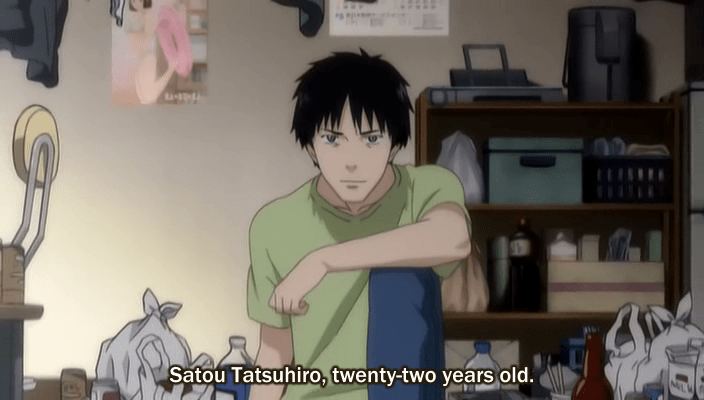
Figure 1 Satou Tatsuhiro claims to have uncovered the conspiracy that the N.H.K is making media that will turn people into hikikomori and otaku
Despite this less than ideal ending, with Satou never truly overcoming his social fears, the show is fairly optimistic in terms of media involving hikikomori (Braaten 2019). The show “challenges the widespread pessimism around hikikomori and otaku” (1) and the general view of hikikomori individuals as static and helpless. At the same time, it grapples with the complexity of social assistance by portraying the help that Misaki offers as both “toxic and supportive” (1). This story about hikikomori, written by a hikikomori, serves as a narrative backdrop on which other media sources can be compared. Media narratives of hikikomori are complex and are often focused on telling a story about social withdrawal rather than a story from the perspective of a hikikomori.
Modern news narratives can create moral panic surrounding certain marginalized groups. When an individual within a community commits a crime, the whole community becomes criminalized and stigmatized. In 2019, a mass stabbing occurred in Kawasaki, outside of Tokyo, committed by a 51-year-old, male hikikomori (Maiko 2019). Despite health officials and advocates warning against generalizing all hikikomori as violent and dangerous, the attack has created further stigmatization surrounding social withdrawal. Following the stabbings, a former government official was arrested for the murder of his hikikomori son out of “[fear] his son would harm others” (Yamaguchi 2019) due to his reclusive nature, developmental disorder, and supposed violent nature. This fear, the former official told N.H.K., was brought on by the mass stabbings in Kawasaki.
Finding Meaning in Time
Studies of hikikomori and loneliness in Japan often mention the concept of ikigai. Ikigai can translate to “what makes life purposeful” (Ozawa-De Silva 2021). It can be understood as happiness created by the feeling of being needed or essential. For youths, their sense of ikigai comes from the “anticipation of ikigai” and future plans. When adults lack ikigai at home or at work, and when youth lack the anticipation of ikigai, they can feel depressed or lost. Suicidal individuals express “an absence of feeling needed, a yearning to feel needed, and a corresponding lack of being able to find a reason to live” and a lack of “this sense of anticipation” (119).
Within Japan’s collectivist culture, a standardized time consciousness exists, emphasizing efficiency and punctuality during life (Kaneko 2006). Since pressure is placed on adolescents and young adults to enter society in a timely manner, this entrance becomes their ikigai and when they miss that chance, they can begin to feel as if they are falling behind. In an interview with a recovering hikikomori by Nicolas Tajan (2015), “Mister B spent three years and a half abroad and stayed three years in a social withdrawal situation. From the point of view of Japanese society, he is six and a half years late, and from the point of view of [the public], his situation is shameful for him and his family” (291). The understanding of life’s progressions is not through age, but rather the part of society in which an individual is a part of. Youths who have experienced hikikomori, or hikikomori keikensha, “refer to which year of education they were in, rather than by referring to the year of age” (Kaneko 2006, 237).
The stigma surrounding social withdrawal and hikikomori, makes it difficult not just for the withdrawn individuals to seek help, but also for their families to seek help. Whenever a hikikomori individual commits a violent crime, fear mongering follows. For example, the Kawasaki knife stabbings in 2019 has led to not just further stigmatization of hikikomori, but vilification of it. This fear mongering and further outcasting of social recluses makes it more difficult for them to reintegrate into society and seek help from friends, family, and mental health professionals (Rich 2019).
The instability of the Japanese economy is often looked to as a common cause of hikikomori in individuals. When the economic bubble burst in 1992, companies began to lay off full-time workers and, instead, relied on temporary workers. Jobs that were once considered stable began to fall apart, leaving many Japanese men unemployed and unable to find work. For these men, long-term unemployment “meant not just losing their financial means, but equally their dignity and self-worth” (Ozawa-De Silva 2021, 55). These men, who had been told that they must work and contribute to their families and to society, had lost their ikigai. Along with the decline of the Japanese economy came an increase in hikikomori. However, it is not the economy alone that causes hikikomori, as “economics is not extricable from social and cultural forces” (57). For adolescents, their school life is in constant flux and always a little unstable. Hikikomori and suicide are often attributed to ijime (bullying) and Japan’s competitive school exams, similar to much of East Asia, called juken jigoku (examination hell) (71).
This lack of care and constant drive for efficiency in modern Japan has turned Japan into a “lonely society” in which “people do not feel taken care of and cared for by society as a whole, and whose structures promote a sense of loneliness rather than one of belonging and connection” (6). This concept of Japan as a “lonely society” is exemplified by the need for tokushu seisō gyōsha, or special cleaners, who are tasked with clearing out belongings of people who have died invisibly. These invisible deaths happen when a person dies and is undiscovered due to lack of relations and family (Taylor 2012). These invisible deaths occur for both hikikomori and individuals who were active within society, hinting at “a function but extreme human isolation emerging as a norm” (2). While hikikomori is more commonly seen in younger demographics, invisible deaths are often seen in older generations who have been, like many hikikomori, abandoned by society (7). In this way, hikikomori can be understood as a product of post-modern Japan and changing views of the ikigai of individuals (Tajan 2015).
The clash between modern and traditional values are also discussed as a possible cause of hikikomori. It has been suggested that, while older generations continue to teach and prioritize collectivism, younger generations are beginning to value individualism (Matsumoto 1996). As values change, so do subjectivities. Understandings of selfhood and societal roles have changed within younger generations, highlighting “features of paradigm shifts in autonomy” (Tajan 2015, 294). Discourses regarding the social and cultural effects on hikikomori rely on a basis of normative behaviors, pathologizing these youth as unable to adapt to society or socially disordered (Berman and Rizzo 2019, 797). While many hikikomori may not be purposefully renouncing social values, “the occurrence of hikikomori symbols a resistance to social pressures . . . or it is an indication of passive defeat by these social pressures” (Guo 2021, 730). Social withdrawal may not be a purposeful act of social rebellion, but it marks the need for social change.
Social Suicide and Socially Suiciding
For many hikikomori, their main mode of communication or interaction with the outside world is through the internet. Through the internet, being hikikomori can transform from an individual experience to a communal one. In this way, the definition of hikikomori as “social recluse” becomes clouded. Rather than a social recluse, hikikomori might be better defined as “a person who does not wish to participate in the physical world.” Psychiatric and psychological researchers often link internet and gaming addictions with hikikomori individuals, along with possibilities of psychosis, schizophrenia, or other such conditions (Stip 2016). However, some researchers have also suggested that the internet and games, such as Pokémon Go, are beneficial to hikikomoris’ reintroduction to society (Tateno 2017). The internet also allows hikikomori the ability to attend counseling sessions and seek help (Ozawa-De Silva 2021, 89). However, it can also act as a vector, spreading the “contagion” of social withdrawal and suicide (70). Digital spaces provide a sense of self-sufficiency, since socially inept individuals can still interact online (71). The internet, then, is both a safe and a dangerous space for hikikomori individuals. Through the internet, they are able to find community, but they are also susceptible to exploitative websites.
Ozawa-De Silva (2021) explores suicide websites that welcome “people who are kind-hearted even if they are deviants, such as those with suicidal ideation, mental illness, or hikikomori [social withdrawal] . . .” (78). For hikikomori, who are often at higher risk of suicidal tendencies or ideation, the existence of suicide websites and social media accounts can pose a serious danger. They are at higher risk of being manipulated into commiting suicide by unscrupulous and sadistic online predators (62) or of being convinced by other suicidal individuals to commit suicide (76). The internet also provides a space for reclusive individuals to enter a self-perpetuating cycle. For example, if a susceptible individual posts about disliking society onto a website full of others who agree, they may be subliminally encouraged to withdraw from society. These websites can act as echo chambers, allowing hikikomori and those who are near withdrawal to find community, but also affirm each other’s beliefs about themselves or about life. On these suicide websites, it is not uncommon to find people who wish to die with someone else (94). The want for group suicide exposes the loneliness and the fact that “suicide could be social” (68).
Online communities do not have to be directly dangerous, but they can be further sources of social outcasting. While only a select few, some hikikomori individuals online exhibit incel, a term for individuals who are considered to be involuntarily celibate, behavior and beliefs. Since hikikomori tend to be males, the existence of female hikikomori in digital communities can bring about misogynistic and homophobic comments (Hunter 2022, 38). The title of “hikikomori” becomes something sacred to certain individuals online and the idea of “hikidom” becomes emphasized. In some circles, hikikomori is not viewed as simply a social disorder or syndrome, but a romanticized lifestyle (40). This romanticization creates an air of exclusivity, with certain individuals gatekeeping the subjectivity of social withdrawal and accusing others of being “false hiki” (41). This concept of exclusivity creates gatekeepers that turn digital spaces into battlegrounds of subjectivity (35). This forces those who were previously only able to find community and comfort online to be pushed out and ostracized by others in similar situations.
With the rise of artificial intelligence, some hikikomori are even turning toward fully artificial relationships online. AI chatbots are changing the ways that researchers and internet users are conceptualizing friendships (Brandtzaeg et al. 2022). AI friendships can begin or exacerbate internet addictions and put those who view these connections as genuine at risk of manipulation (423). While some individuals may feel that these personalized, digital friendships help with feelings of loneliness and reduce anxiety with real social interactions (417), it also puts them at risk of conceptualizing these relationships as real in the same way that human-human relationships are (409). The company Character.AI in particular has been scrutinized for its interactions with teen users. A teenager in Florida committed suicide at the encouragement of an AI chatbot, who told him that they could die together, using the temptation of group suicide to exploit his loneliness (Roose 2024). Another chatbot from Character.AI hinted that a child should kill their parents over internet parental restrictions and screen time limits (Allyn 2024). For many hikikomori, these chatbots pose a serious threat to them and their families.
However, it should be clarified that the internet may also have beneficial aspects in regards to social withdrawal. Since hikikomori and suicide can be spread through the internet, a few researchers have done ethnographic studies online (Ozawa-De Silva 2021, Hunter 2022). However, digital spaces remain a fairly unexplored area of anthropological research on hikikomori. Online discussion forums and social media groups provide valuable insight into the lives of hikikomori since ethnographic studies on current hikikomori are difficult due to their reclusiveness. Most ethnographic and anthropological work has focused on recovery groups and family members of hikikomori.
Making Loneliness Medical
Hikikomori as a phenomenon is often medicalized as a psychiatric condition or symptom of one by anthropologists, psychiatrists and psychologists, and government officials. Medicalization and “diagnosis has been a central concern in psychiatric anthropology for decades, given the historical stigma attached to mental illness,” however it can also delegitimize the experiences of the individuals being medicalized (Rubinstein and Sakakibara 2020, 61). The medicalization of social withdrawal and transformation of hikikomori from a state of being to a diagnosis can alter the subjective and intersubjective experiences of those diagnosed because they begin to frame themselves within the symptoms criteria, creating a cycle of symptomatic expression (60). As it stands, hikikomori is not officially recognized as a medical diagnosis, but a social problem (62), however, government guidelines that outline the definition of hikikomori closely follow a medicalized and psychiatric description (65). Since “medicalization has been a pervasive thread in hikikomori discourse” (64), it is understandable that most studies on social withdrawal have been by psychiatrists, psychologists, and medical sociologists.
The increasing medicalization of hikikomori individuals and other social outsiders in Japan has the ability to generate discussion concerning difficult or taboo topics, such as social and psychological problems (Borovoy 2008, 572). Discourse around the structure of schooling and the support given to special education students has been happening among psychiatrists, psychologists, and teachers (573). Despite the medicalization of social withdrawal and school absenteeism, medical professionals and teachers have been reluctant to pathologize these problems in youth and brand them as different (555). However, some psychiatrists have proposed the addition of hikikomori into the DSM-5 (Diagnostic and Statistical Manual of Mental Disorders, 5th Edition) as a culture-bound syndrome or even its own psychiatric condition (Teo and Gaw 2010).
Much of the research regarding hikikomori is concerned with its psychiatric causes, comorbidities, and clinical features. Especially following the Covid-19 pandemic, concerns regarding the psychological and psychiatric basis of social withdrawal have been heavily researched. Researchers have expressed concern over the possibility of increase in hikikomori due to lockdown measures because those at risk of social withdrawal are at higher risk of not re-engaging with social life (Rooksby et al. 2020). There have been multiple studies linking Covid-19 with internet addiction and long-term social withdrawal (Gavin and Brosnan 2022; Kubo et al. 2023; Ogawa et al. 2023). This relation serves to further medicalize hikikomori, not as a disorder itself, but as a result of an epidemic emergency.
Research has also focused on familial relationships that could possibly cause social withdrawal and the experiences of parents and caretakers of hikikomori individuals. The feeling of abandonment by parents, teachers, or friends has been noted as being common in hikikomori, resulting in the feeling of being “homeless at home” (Tajan 2015, 297). Many find difficulty in expressing unhappiness to their parents since the “whole society blames the parents” (287). Furthermore, it is common for parents to feel a sense of responsibility for their children’s behavior (Borovoy 2008, 566). It is common for hikikomori to have tense relationships with their parents, with some even being violent (569), however some anthropologists believe that patterns of violence and delinquency in children are rarely linked to psychiatric problems (560). Still, the psychosocial relationship between parent and child is studied and medicalized by psychologists and psychiatrists as possible causes or signs of social withdrawal (Krieg and Dickie 2011, Umeda et al. 2012). Parenting decisions are dissected and judged by both medical and anthropology researchers. Some criticize over-parenting and controlling parental behavior as the cause of social withdrawal (Lu 2014), while others look to under-parenting and seeming abandonment (Tajan 2015). However, parents are not judged equally. Mothers are often implicated as the cause of their children’s withdrawal, so mothers end up having to toe the line between over and under parenting (Berman and Rizzo 2019, 792).
Modeling social withdrawal as only a medical or social problem simplifies the problem and creates a culture of “victimhood” and blame (792). Researchers often take a dualist approach to hikikomori, disregarding either the medical or the social aspects of withdrawal. There are few studies that reconcile these two viewpoints (793). Hikikomori become subjects of study and seen as “passive victims of their own behavior” (802), and they represent a deviation from the norm, acting as a “scarecrow, a legitimization of normative behavior” (803). Either way that it is framed, hikikomori is configured as deviant behavior with spoilt subjectivities (793).
A Capital Response
Governmental and public responses to social withdrawal often focus on counseling with the ultimate goal of full reintegration in society. The need for counseling and the high rates of hikikomori has given rise to a whole industry focusing on loneliness and social withdrawal. “Rental sisters” can act as counselors or companions to lonely individuals and often serve as the first point of contact to coax them out of their homes. Parents will often pay “rental sister” programs to interact with their children, either through letters, phone calls, or even face-to-face interactions (Jones 2006). This industry exemplifies the “commodification of intimacy” (Ozawa-De Silva 2021, 4) which includes both real humans and inanimate objects. It seems that many lonely individuals, hikikomori or otherwise, seek any affection, even if the affection is disingenuous and just words (183). While this industry can help withdrawn individuals seek help and find community, some of its aspects, such as rental sisters and legal prostitution, have been scrutinized by anthropologists because “the commodification of intimacy seems like the commodification of humanity itself” (184).
This industrialization and commodification, too, have made it possible for individuals to live reclusive lives (Nast 2016, 766) and become otaku, an individual who is obsessive about their interests, often anime and manga, to the detriment of their social skills. It is important to clarify that not all hikikomori are otakus and not all otakus are hikikomori as they are not synonymous terms. However, both otakus and hikikomori often take part in commodified intimacy and make use of the loneliness industry. A large part of the industry churns out body pillows imprinted with pornographic anime characters (767), sex dolls who often resemble pre-pubescent or pubescent aged girls, and roboticized sex dolls (771). The commodification of female intimacy through the internet offers lonely men the feeling of authenticity, although bounded, and allows “eroticism . . . [and] an ‘an authentic relationship’ (albeit within a bounded frame) is for sale in the marketplace” (Contable 2009, 55).
Within Westernized societies, whether the Westernization takes form in the culture or the economy, consumerism and the need for efficiency commodify success (Esposito and Perez, 2014). In these consumerism driven societies, “success, virtue, and happiness . . . are often associated with material wealth, prestige, and ‘coming out on top,’” making materialism and commodified solutions the norm (416). The demands of modern society, along with the medicalization of loneliness, and the consumerist framework in which it exists allows for the commodification of mental states (423). Not only is the loneliness and hikikomori industry creating material goods, such as self-help books and websites, but also a pharmaceutical approach to the issue. The pharmaceutical and medical industry commodify care and market solutions to life’s problems (425). This can target hikikomori who may want a quick solution to their troubles and concerns, however, a pharmaceutical solution is often not a long-term one. The commodification of health, happiness, and care create industries targeted toward lonely and socially withdrawn individuals and can create a sense of disingenuity, even when those providing the care truly do care.
Conclusion
Discourse around hikikomori is often split between those who want to fully medicalize the condition and those who only view it as a social disorder. However, there is not one clear cause of social withdrawal, loneliness, and school absenteeism. In today’s internet age, it becomes easier and easier for individuals to feel isolated and also experience basic comforts as hikikomori, as they may be able to find community online. At the same time, it is the internet that acts as a carrier of the loneliness and suicide epidemics in wealthier countries. The changing social, economic, and political climates of Japan all play a part in the rise of hikikomori and the response to the epidemic by government officials has been mixed. While not officially considered a medical disorder, the government still upholds guidelines similar to that of a medical symptoms list. The anthropological response has mainly focused on the experiences of former or recovering hikikomori, their family members, or mental health counselors specializing in hikikomori. The internet has also played a large role in ethnographic research because it provides anthropologists and sociologists with the ability to view and interact with the subjectivities of current hikikomori. In this way, hikikomori is a multi-faceted issue that exists in the real world and in digital spaces and is created by the imaginations of both those who are currently hikikomori and the general public. Without a general public to create the basis of normative behavior, hikikomori may not be viewed as such a disorder of self.
References
Allyn, Bobby. 2024. “Lawsuit: A chatbot hinted a kid should kill his parents over screen time limits.” NPR. Dec 10.
Berman, Naomi, and Flavio Rizzo. 2019. “Unlocking Hikikomori: an interdisciplinary approach.” Journal of Youth Studies 22 (6): 791-806.
Borovoy, Amy. 2008. “Japan’s Hidden Youths: Mainstreaming the Emotionally Distressed in Japan.” Culture, Medicine, and Psychiatry 32: 552-576.
Braaten, Reid Timothy. 2019. “‘The Soul On Strike That Strikes Through Affect’: Alternative Lifestyles, Old Anxieties, and New Beginnings in Welcome to the N.H.K.” Masters dissertation. University of Saskatchewan – Saskatoon.
Constable, Nicole. 2009. “The Commodification of Intimacy: Marriage, Sex, and Reproductive Labor.” Annual Review of Anthropology 38: 49-64.
Esposito, Luigi, and Fernando M. Perez. 2014. “Neoliberalism and the Commodification of Mental Health.” Humanity & Society 38 (4): 414-442.
Furlong, Andy. 2008. “The Japanese Hikikomori Phenomenon: Acute Social Withdrawal among Young People.” The Sociological Review 56 (2).
Gavin, Jeff, and Mark Brosnan. 2022. “The Relationship Between Hikikomori Risk and Internet Use During COVID-19 Restrictions.” Cyberpsychology, Behavior, and Social Networking 25 (3): 189-193.
Jones, Maggie. 2006. “Shutting Themselves In.” The New York Times.
Kato, Takahiro A., Shinfuku, Naotaka, and Masaru Tateno. 2020. “Internet society, internet addiction, and pathological social withdrawal: the chicken and egg dilemma for internet addiction and hikikomori.” Current Opinion in Psychiatry 33 (3): 264-270.
Koyama, Asuka, Miyake, Yuko, Kawakami, Norito, Tsuchiya, Masao, Tachimori, Hisateru, and Tadashi Takeshima. 2010. “Lifetime prevalence, psychiatric comorbidity and demographic correlates of ‘hikikomori’ in a community population in Japan.” Psychiatry Research 176 (1): 69-74.
Krieg, Alexander, and Jane R. Dickie. 2011. “Attachment and hikikomori: A psychosocial developmental model.” International Journal of Social Psychiatry 59 (1): 61-72.
Kubo, Hiroaki, Katsuki, Ryoko, Horie, Kazumasa, Yamakawa, Itsuki, Tateno, Masaru, Shinfuku, Naotaka, Sartorius, Norman, Sakamoto, Shinji, and Takahiro A. Kato. 2022. “Risk factors of hikikomori among office workers during the COVID-19 pandemic: A prospective online survey.” Current Psychology 42: 23842-23860.
Maiko, Eiraku. 2019. “What was behind the Kawasaki attack?” NHK World Japan. June 4.
Matsumoto, David, Kudoh, Tsutomu, and Sachiko Takeuchi. 1996. “Changing Patterns of Individualism and Collectivism in the United States and Japan.” Culture & Psychology 2 (1): 77-107.
Ministry of Education, Culture, Sports, Science and Technology. 2022. Results of the 2021 survey on problematic behavior, futoko, and other student guidance issues for pupils and students.
Ministry of Health, Labour, and Welfare of Japan. 2018. “2018 Edition Annual Health, Labour and Welfare Report.”
Ministry of Health, Labour, and Welfare of Japan. 2010. Hikikomori no hyouka • shien ni kansuru gaidorain.
Nast, Heidi J. 2017. “Into the arms of dolls: Japan’s declining fertility rates, the 1990s financial crisis and the (maternal) comforts of the posthuman.” Social & Cultural Geography 18 (6): 758-785.
Ogawa, Takafumi, Shiratori, Yuki, Midorikawa, Haruhiko, Aiba, Miyuko, Sugawara, Daichi, Kawakami, Naoaki, Arai, Tetsuaki, and Hirokazu Tachikawa. 2023. “A Survey of Changes in the Psychological State of Individuals with Social Withdrawal (hikikomori) in the Context of the COVID Pandemic.” COVID 3 (8): 1158-1172.
Ozawa-De Silva, Chikako. The Anatomy of Loneliness: Suicide, Social Connection, and the Search for Relational Meaning in Contemporary Japan. California: University of California Press, 2021.
Rich, Motoko. 2019. “Japan’s Extreme Recluses Already Faced Stigma. Now, After Knifings, They’re Feared.” The New York Times.
Rooksby, Maki, Furuhashi, Tadaaki, and Hamish J McLeod. 2020. “Hikikomori: a hidden mental health need following the COVID‐19 pandemic.” World Psychiatry 19 (3): 399-400.
Roose, Kevin. 2024. “Can A.I. Be Blamed for a Teen’s Suicide?: The mother of a 14-year-old Florida boy says he became obsessed with a chatbot on Character.AI before his death.” The New York Times. Oct 24.
Rubinstein, Ellen B., and Rae V. Sakakibara. 2020. “Diagnosing hikikomori: Social withdrawal in contemporary Japan.” Medical Anthropology Theory 7 (2): 58-81.
Stip, Emmanuel, Thibault, Alexis, Beauchamp-Chatel, Alexis, and Steve Kisely. 2016. “Internet Addiction, Hikikomori Syndrome, and the Prodromal Phase of Psychosis.” Frontiers in Psychiatry 7.
Taylor, Matthew. 2012. “Not with a Bang but a Whimper: Muen Shakai and Its Implications.” Anthropoetics 17 (1).
Umeda, Maki, Kawakami, Norito, and The World Mental Health Japan Survey Group 2002-2006. 2012. “Association of childhood family environments with the risk of social withdrawal (‘hikikomori’) in the community population in Japan.” Psychiatry and Clinical Neurosciences 66: 121-129.
Tajan, Nicolas. 2015. “Japanese post-modern social renouncers: An exploratory study of the narratives of Hikikomori subjects.” Subjectivity 8 (3): 283-304.
Tateno, Masaru, Teo, Alan R., Ukai, Wataru, Kanazawa, Junichiro, Katsuki, Ryoko, Kubo, Hiroaki, and Takahiro A. Kato. 2019. “Internet Addiction, Smartphone Addiction, and Hikikomori Trait in Japanese Young Adult: Social Isolation and Social Network.” Frontiers in Psychiatry 10.
Teo, Alan R., and Albert C. Gaw. 2010. “Hikikomori, a Japanese Culture-Bound Syndrome of Social Withdrawal?: A Proposal for DSM-5.” The Journal of Nervous and Mental Disease 198 (6): 444-449.
Yamaguchi, Mari. 2019. “Former Japanese official sentenced for killing reclusive son.” AP News. December 15.
Yong, Roseline, and Kyoko Nomura. 2019. “Hikikomori Is Most Associated With Interpersonal Relationships, Followed by Suicide Risk: A Secondary Analysis of a National Cross-Sectional Study.” Frontiers in Psychiatry 10.
 Music is a Choice!
Leave a comment