Itroduction
In Harajuku, Japanese youths influence the trends of the fashion industry. Teens and young adults often use fashion as a means of self expression, societal rebellion, and creating groups with similar ideas and tastes (Kawamura 2006). This essay explores the ways in which feminine Japanese youth subcultures disrupt gender norms and how they are popularized through social media. I present two case studies, one focusing on Lolita fashion and the other on Genderless Danshi, and discuss the ways they explore gender. I argue that Japanese youth use hyperfeminine fashion and social media, specifically Instagram, to redefine how gender can be performed and understood. I use Judith Butler’s theory of performative gender acts, bell hooks’ theory of the oppositional gaze, and the concept of kawaii to analyze the ways that Lolitas and Genderless Danshi are exploring gender and femininity in contemporary Japanese culture.
Butler’s theory of performative gender and bell hooks’ theory of the oppositional gaze are Western theories, however, I will translate them into the context of 21st century Japanese culture. I use Butler’s theory that the normative appearance of genders is constructed and upheld by the society it resides in to explain and define what contemporary Japanese society deems as feminine attributes. Bell hooks’ theory of the oppositional gaze is on African-American women, but as I am focusing on Japan, I will be focusing on the aspects that concern all women as a marginalized group.
Instagram and the Spread of Japanese Youth Subcultures
Lolita Fashion as Feminist Rebellion
Lolita fashion draws inspiration from highly romanticized versions of Victorian and Rococo styles. Masafumi Monden (2013) suggests that Lolita fashion is a fusion of Victorian and Rococo European dresses and popular contemporary Japanese styles. This style focuses on innocence and childishness, mimicking styles similar to European children’s dresses (Monden 2013, 166-167). Lolitas have become prominent in Japanese culture, even finding a place within Japan’s Foreign Ministry as ambassadors of cute, spreading Japanese pop culture to the rest of the world (Reynolds 2009). One of these ambassadors of cute, Misako Aoki, is influential in the Lolita world as President of the Japan Lolita Association.
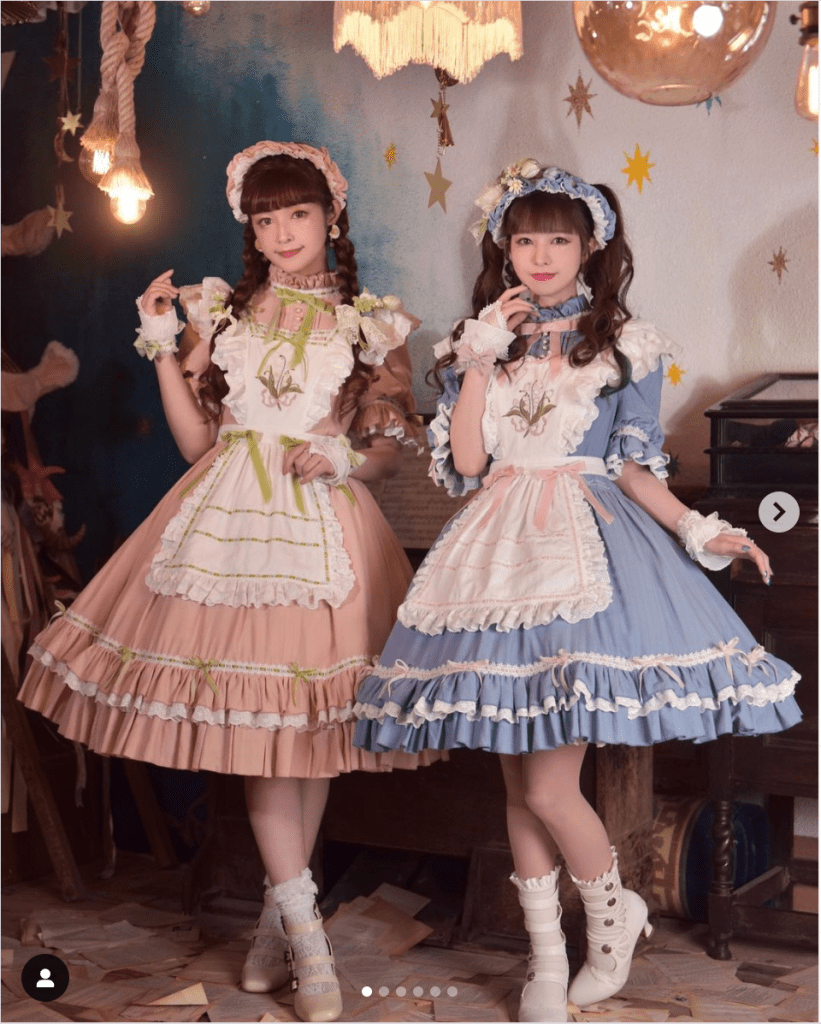
Figure 1 Misako Aoki posing with Lolita model Haruna Luna. (Photograph from Misako Aoki’s Instagram, 29 March 2022).
In a post with Lolita model Haruna Luna, seen in Figure 1, the two women are wearing matching dresses, one pink and one blue, reminiscent of French maids. They are heavily adorned with frills, lace, and ribbons, and posing in a way that suggests innocence and youth. In this post’s caption, Misako uses language associated with young children in Japan, such as referring to herself in third person and using the diminutive signifier “tan” instead of “chan.”
Just as Judith Butler (1988) suggests, they are acting in a way that aligns with compulsory contemporary Japanese heterosexuality, however, in an extreme fashion. I propose that they have constructed an identity that goes beyond contemporary Japanese heterosexual femininity, forming a new gender of hyperfemininity. This performance, despite growing from this heterosexual femininity, is meant for the gaze of women and Misako herself. As Cameron Deborah (2006) explains in an article for The Sydney Morning Herald, Lolita fashion is about passive-aggressive resistance and is a culture of pure indulgence. Women who are professionally involved in the culture, such as designers and models, maintain creative control over their work and professional success (Christopherson 2014, 22). In this way, Misako uses Instagram to control her public image and perform for a wider audience.
As of May 2022, she has a follower count of 130k, and according to reports by Statista (2022) and projection by Humble Bunny (2021), the biggest user demographic of Instagram in Japan is women between the ages of 18 and 34. According to the same projection report by Humble Bunny, Instagram is popular amongst young Japanese women interested in beauty and fashion and brands and influencers hoping to increase exposure. Therefore, it is likely that the majority of her followers are young women interested in joining the Lolita community or keeping up with the latest trends.
Paradoxically, this hyperfeminine look has received contempt from those concerned about the style’s seeming infantilization (Hardy and Adele 2011) and men. In interviews with Lolita blogger, Azuki M, Misako discusses the disgust she receives from men her age, around thirty, due to her fashion and its perceived inappropriateness for an adult woman. However, the style was created and developed for the female gaze by females. Rather than view femininity as a constraining ideal, Lolitas explore the limits of it and mold it to fit the oppositional female gaze. Bell hooks (1992) explains the oppositional gaze as one that declares “Not only will I stare. I want my look to change reality.” Lolita is a lifestyle, essential to the identity of a person (Christopherson 2014, 13). As Misako explains, “Giving up on something just because of your age is such a waste, isn’t it? If you love something, you shouldn’t give up on it. That’s what I think.”
Redefining Androgyny With Genderless Danshi
Genderless Danshi is a fairly new fashion subculture, emerging in the mid-2010s. While “genderless” can be used to describe women who dress in a masculine fashion, the style of Genderless Danshi is specifically used for men who dress femininely, as danshi translates to boy. They wear clothing and act in ways typically considered feminine in contemporary Japanese society, however, they are not crossdressers, but rather, avoiding “limiting definitions of gender” (Balkon 2018). The style is an internet phenomenon, growing traction through Instagram and Tumblr (Ashley Clarke 2016).
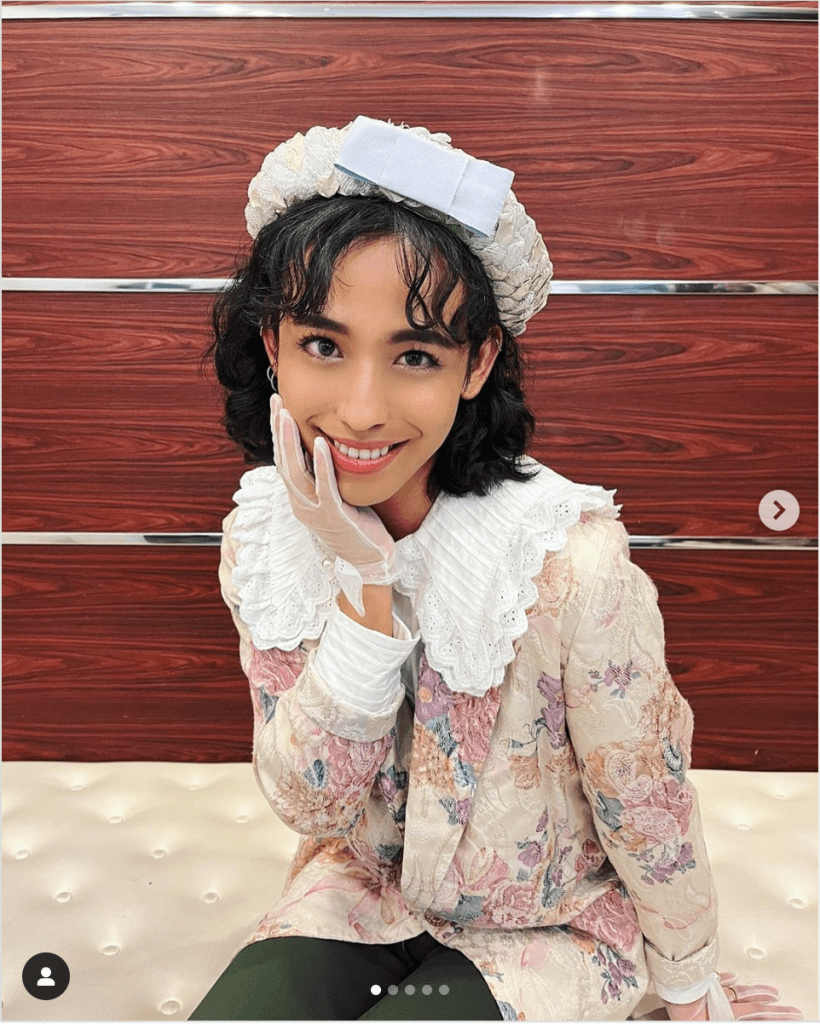
Figure 2 Instagrammer Ryuchell posing in florals and lace. (Photograph from Ryuchell’s Instagram, 05 Feb 2022).
Figure 2 shows famous Instagram influencer Ryuchell posing in a way common for female Japanese models. Todd Holden (2012) describes female magazine models in Japan as posing in “less ‘open’, direct, or ‘undefended’ ways than men.” Such poses include hands in front of the face, twisting the body away from the camera, and tilting the head, all of which can be seen in Ryuchell’s post. Similar to Lolitas, he is adorned with lace and frills, though, in much simpler styles.
Genderless Danshi is a style that pushes the limits of 21st century Japanese hegemonic masculinity. Despite performing feminine gender acts, they identify as men. According to Butler, “if gender is instituted through acts which are internally discontinuous, then the appearance of substance is precisely that, a constructed identity, a performative accomplishment which the mundane social audience, including the actors themselves, come to believe and to perform in the mode of belief.” (520) I suggest that Genderless Danshi have taken on an appearance and behaviors that the mundane social audience of Japan has come to believe to be specifically feminine, and used them in an attempt to redefine what masculine performance can look like.
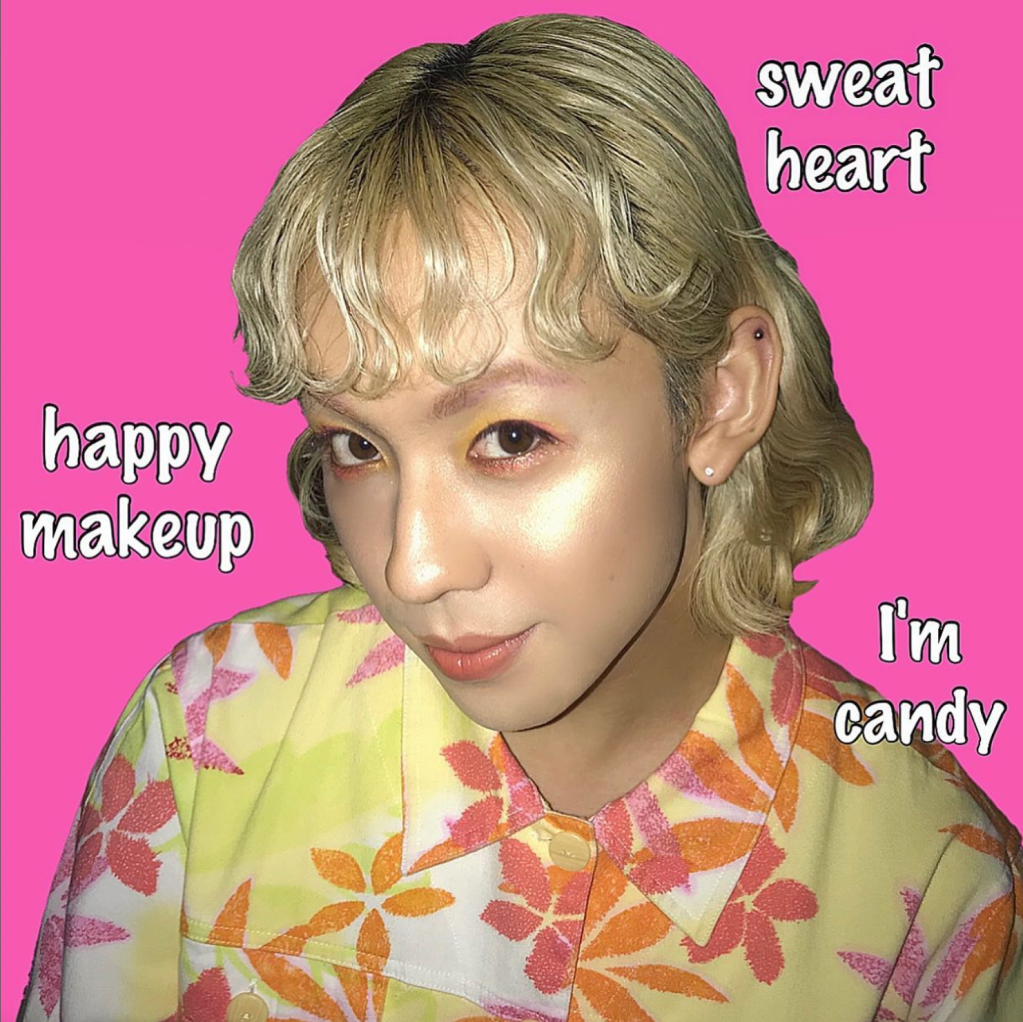
Figure 3 Ryuchell shows off his makeup and hair in an edited photo. (Photograph from Ryuchell’s Instagram, 06 Oct 2019).
Since Genderless Danshi is a culture that grew through the internet, Ryuchell performs his gender through Instagram. He uses edited photos, as seen in Figure 3, to achieve the “kawaii” aesthetic. He has edited himself in front of a bright pink background with “kawaii” buzzwords such as “happy,” “candy,” and “sweetheart.” This post is meant for the gaze of anyone who enjoys “kawaii” and “lovely” aesthetics.
Mary Christopherson (2014) describes “kawaii” as a concept that, while translating to cute and lovely, goes beyond simply cute. She explains that “kawaii” as a concept was largely created and cultivated by and for women” (5), however it benefits Japanese men because “through rejection of adulthood and embracing the feminine, men can find release within kawaii culture.” (19) Influencers like Ryuchell are taking a concept created for the female gaze by females and suggest that it can also be for the male gaze, and that following a culture where the female gaze is the dominant gaze could be liberating for men who fall outside of contemporary Japanese male norms.
Conclusion
Japanese youth use fashion to express themselves and rebel against the traditional Japanese expectations (Kawamura 2006). Japanese girls and women, in particular, influence popular fashion trends and subcultures (787). This essay explored two fashion subcultures and the ways in which they use ideas of contemporary Japanese femininity to redefine what gender performance can look like. Using Butler’s theory of performative gender and Hooks’ theory of the oppositional gaze, I suggested that Lolita fashion and Genderless Danshi use the female gaze to construct a style and culture that explores alternative ways that contemporary Japanese femininity can be expressed and shared with a wider audience through Instagram.


Leave a Reply